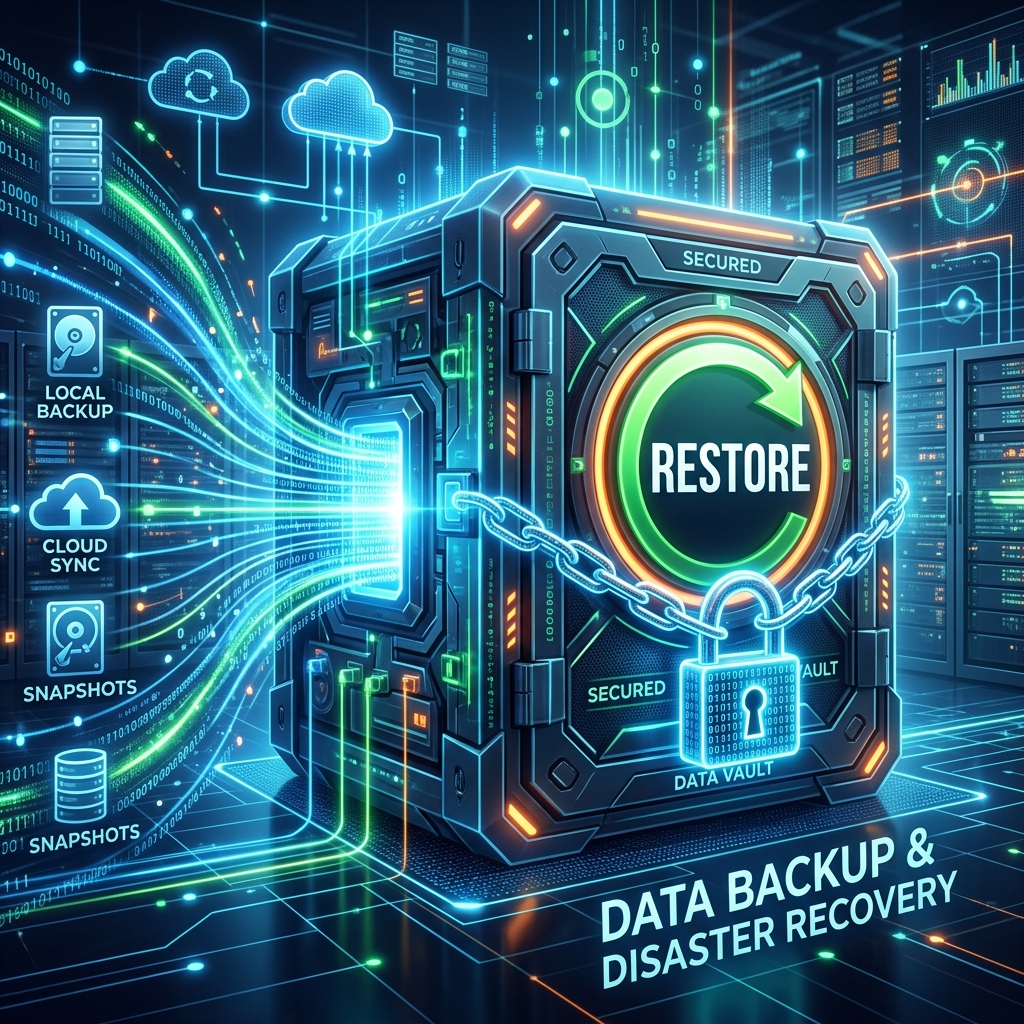
English: Imagine waking up one morning to find your company's entire database encrypted by ransomware, or your personal computer's hard drive completely dead. In our digital-first world, data is the lifeblood of any organization. Yet, millions of users and businesses neglect one critical shield: an effective data backup and recovery strategy. Waiting for a disaster to occur before setting up a backup system is like buying a fire extinguisher after your house has burned down.
Hindi: कल्पना कीजिए कि एक सुबह आप उठते हैं और पाते हैं कि आपकी कंपनी का पूरा डेटाबेस रैनसमवेयर (ransomware) द्वारा एन्क्रिप्ट कर दिया गया है, या आपके पर्सनल कंप्यूटर की हार्ड ड्राइव पूरी तरह खराब हो चुकी है। आज की डिजिटल दुनिया में, डेटा किसी भी संगठन की जीवनरेखा है। इसके बावजूद, लाखों यूजर्स और व्यवसाय एक महत्वपूर्ण सुरक्षा कवच की उपेक्षा करते हैं: एक प्रभावी डेटा बैकअप और रिकवरी रणनीति। बैकअप सिस्टम सेटअप करने के लिए किसी आपदा के आने का इंतज़ार करना वैसा ही है जैसे घर जलने के बाद अग्निशामक यंत्र (fire extinguisher) खरीदना।
1. The Cost of Negligence: Why Backups are Non-Negotiable | लापरवाही की कीमत: बैकअप क्यों जरूरी है
English: Many businesses operate under the dangerous assumption that "it won't happen to me." However, data loss is not a matter of 'if', but 'when'. According to industry statistics, over 60% of small businesses that experience massive data loss shut down within six months of the incident. The threats are diverse: hardware failures, accidental human deletion, malicious cyberattacks, and natural disasters like floods or fires.
Hindi: कई व्यवसाय इस खतरनाक गलतफहमी में जीते हैं कि "यह मेरे साथ नहीं होगा।" हालांकि, डेटा का खो जाना 'अगर' का नहीं, बल्कि 'कब' का मामला है। उद्योग के आंकड़ों के अनुसार, बड़े पैमाने पर डेटा हानि का सामना करने वाले 60% से अधिक छोटे व्यवसाय इस घटना के छह महीने के भीतर बंद हो जाते हैं। खतरे कई प्रकार के हैं: हार्डवेयर की खराबी, मानवीय भूल से डेटा डिलीट होना, साइबर हमले, और बाढ़ या आग जैसी प्राकृतिक आपदाएं।
- Ransomware Threats (रैनसमवेयर का खतरा): Modern cybercriminals do not just steal data; they lock you out of your own systems and demand exorbitant ransoms.
- Human Error (मानवीय त्रुटि): Accidental deletion or improper formatting accounts for a significant percentage of data loss incidents globally.
- Hardware Lifespan (हार्डवेयर का जीवनकाल): Hard drives and SSDs have a limited operational lifespan and can fail without any warning signs.
2. The 3-2-1 Backup Rule: The Golden Standard | 3-2-1 बैकअप नियम: सुरक्षा का सुनहरा मानक
English: To guarantee that your data is safe under any circumstance, cybersecurity experts recommend implementing the time-tested 3-2-1 Backup Strategy. It eliminates single points of failure by distributing your backups across multiple formats and locations.
Hindi: यह सुनिश्चित करने के लिए कि आपका डेटा किसी भी परिस्थिति में सुरक्षित रहे, साइबर सुरक्षा विशेषज्ञ समय की कसौटी पर खरी उतरी 3-2-1 बैकअप रणनीति को लागू करने की सलाह देते हैं। यह आपके बैकअप को कई रूपों और स्थानों पर वितरित करके विफलता के जोखिम को समाप्त करता है।
Breaking Down the 3-2-1 Rule (3-2-1 नियम का विश्लेषण):
- 3 Copies of Data (डेटा की 3 प्रतियां): Maintain one primary production copy and at least two separate backup copies.
- 2 Different Media (2 अलग-अलग मीडिया प्रकार): Store your backups on two different types of devices or media (e.g., one on an internal hard drive, and another on an external drive or Network Attached Storage - NAS).
- 1 Offsite Location (1 ऑफसाइट स्थान): Keep at least one backup copy offsite, completely away from your physical office or home, ideally in a secure cloud environment.
3. Cloud vs. Local Backups: Finding the Perfect Balance | क्लाउड बनाम लोकल बैकअप: सही संतुलन बनाना
English: Both local and cloud backups have unique advantages. Local backups (like external SSDs or NAS drives) offer incredibly fast recovery times since they do not rely on internet bandwidth. However, they are vulnerable to local physical disasters. On the other hand, Cloud backups (like AWS, Google Cloud, or Microsoft Azure) protect against physical hazards at your location but might take longer to restore during massive data events.
Hindi: लोकल और क्लाउड बैकअप दोनों के अपने अनूठे फायदे हैं। लोकल बैकअप (जैसे एक्सटर्नल SSD या NAS ड्राइव) बहुत तेज़ रिकवरी प्रदान करते हैं क्योंकि वे इंटरनेट स्पीड पर निर्भर नहीं होते हैं। लेकिन वे भौतिक आपदाओं (जैसे आग या चोरी) के प्रति संवेदनशील होते हैं। दूसरी ओर, क्लाउड बैकअप (जैसे AWS, Google Cloud, या Azure) आपके स्थान पर होने वाले भौतिक खतरों से सुरक्षा प्रदान करते हैं, लेकिन बड़े पैमाने पर डेटा रीस्टोर करने में थोड़ा अधिक समय ले सकते हैं।
Actionable Advice (काम की सलाह): Use a hybrid model. Keep your active daily files backed up locally for rapid recovery, while syncing critical, archive-level data automatically to a secure cloud platform overnight.
4. Disaster Recovery Planning: RTO and RPO | आपदा रिकवरी योजना: RTO और RPO को समझें
English: Simply backing up data is only half the battle won. The real test of a backup system lies in its recovery capabilities. To design an effective Disaster Recovery Plan (DRP), businesses must define two critical metrics:
Hindi: केवल डेटा बैकअप लेना आधी जंग जीतने जैसा है। बैकअप सिस्टम की असली परीक्षा उसकी रिकवरी (recovery) क्षमता में होती है। एक प्रभावी डिजास्टर रिकवरी प्लान (DRP) डिजाइन करने के लिए, व्यवसायों को दो महत्वपूर्ण मानकों को परिभाषित करना होगा:
- Recovery Point Objective - RPO (रिकवरी पॉइंट ऑब्जेक्टिव): This defines how much data loss your organization can tolerate in terms of time. For example, if your RPO is 4 hours, you must perform backups at least every 4 hours.
- Recovery Time Objective - RTO (रिकवरी टाइम ऑब्जेक्टिव): This defines how quickly your systems must be restored to full operation after a disaster. An RTO of 2 hours means your business must be back online within 2 hours of a failure.
English: Regular dry runs and restoration drills are vital. If you haven't successfully restored data from your backup system recently, assume your backup does not work.
Hindi: बैकअप का समय-समय पर परीक्षण (restoration drills) करना अत्यंत आवश्यक है। यदि आपने हाल ही में अपने बैकअप सिस्टम से डेटा को सफलतापूर्वक रीस्टोर करके नहीं देखा है, तो मान लें कि आपका बैकअप काम नहीं कर रहा है।
Conclusion: Act Before It's Too Late | निष्कर्ष: बहुत देर होने से पहले कदम उठाएं
English: Data backup and disaster recovery is not an IT expense; it is an investment in business continuity. A solid plan ensures peace of mind, protects reputation, and saves thousands of dollars in recovery costs. Start by automating your backups today, verifying your encryption settings, and testing your recovery procedure.
Hindi: डेटा बैकअप और डिजास्टर रिकवरी कोई आईटी खर्च नहीं है; यह व्यवसाय की निरंतरता में किया गया एक निवेश है। एक मजबूत योजना मानसिक शांति सुनिश्चित करती है, प्रतिष्ठा की रक्षा करती है, और रिकवरी पर होने वाले भारी खर्च से बचाती है। आज ही अपने बैकअप को ऑटोमेट करें, सुरक्षा सेटिंग्स की जांच करें, और अपनी रिकवरी प्रक्रिया का परीक्षण शुरू करें।